Showing posts with label Hotel management course. Show all posts

Wednesday, August 20, 2025

Sustainability as a Strategic Pillar in Hotel Management


1. Why Sustainability is No Longer Optional

In 2025, sustainability is a core business strategy for hotels worldwide. Guests are increasingly prioritizing eco-conscious choices — research shows that over 70% of travelers prefer accommodations with green certifications. This trend is particularly strong in India, where eco-travel is now one of the fastest-growing market segments.

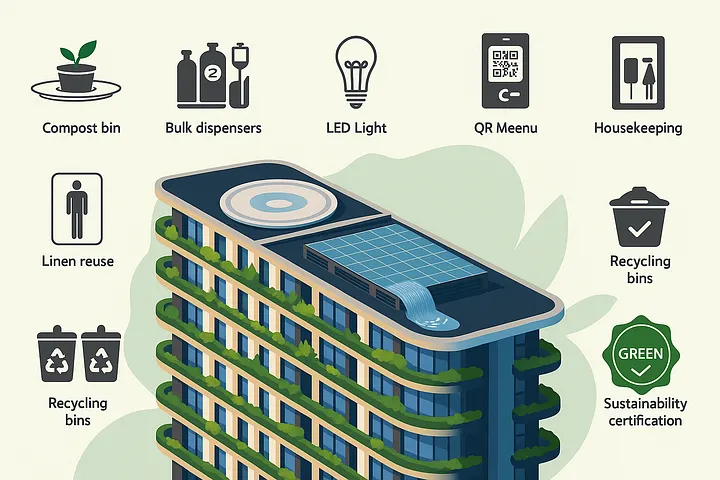
For hoteliers, sustainability is not just about public image — it directly reduces costs. By installing LED lighting, smart thermostats, and water-saving fixtures, hotels can lower utility bills by up to 30% annually. This blend of profitability and responsibility has made green practices an indispensable part of hospitality.

2. Green Practices Reshaping Hotels

Hotels across India and abroad are embracing innovative measures that balance guest comfort with eco-efficiency:

  • Food Waste Reduction
    Properties in Bengaluru are experimenting with digital buffet boards that let guests preview menus, reducing overproduction. Some chains now integrate AI-driven kitchen tracking and food donation programs to tackle waste at scale.
  • Eco-Friendly Amenities
    Luxury and budget hotels alike are shifting from miniature plastic toiletries to bulk bathroom dispensers, cutting millions of plastic bottles from landfills each year.
  • Water Conservation
    Resorts in Rajasthan use rainwater harvesting and greywater recycling for landscaping and utilities, a practice now recommended across drought-prone regions.
  • Smart Energy Systems
    Flagship hotels like the ITC Grand Chola in Chennai have achieved LEED Zero Carbon certification, thanks to renewable energy integration, waste-to-compost plants, and a dedicated 12.6 MW windmill.
  • Digital Transformation
    QR code menus, app-based check-ins, and paperless billing reduce paper usage while improving guest convenience — an eco-friendly solution that also supports contactless service.

3. Leading Indian Examples

  • ITC Hotels — Responsible Luxury
    Every ITC property integrates solar power, efficient HVAC systems, and waste recycling, making it a leader in sustainable hospitality.
  • Taj Hotels (IHCL)
    From organic menus to EarthCheck certifications, Taj properties balance luxury with eco-consciousness. The Taj Exotica in the Andamans runs partly on desalinated and rain-harvested water while safeguarding coral reefs.
  • The Fern Hotels
    Known for their zero-plastic operations and Green Leaf eco-certifications, Fern proves that sustainability is achievable even for midscale hotels.
  • Zostel
    Budget-friendly yet eco-driven, Zostel uses local building materials and cultural integration to promote sustainable tourism.

4. Global Innovations to Watch

5. Why Sustainability Pays Off

  • Revenue Growth: Eco-certified hotels often enjoy higher occupancy and attract younger, socially conscious travelers who willingly pay a premium for responsible stays.
  • Cost Reduction: A 100-room business hotel in India reported saving ₹5 lakh annually after switching to LED lights and water-saving devices.
  • Brand Loyalty: Guests who connect with a brand’s sustainability values are more likely to return and recommend, boosting long-term profitability.
  • Team Morale: Green initiatives create a sense of purpose among employees, increasing motivation and retention.

6. Building the Future Workforce

For aspiring hoteliers, sustainability skills are no longer optional — they’re essential. Top institutions are weaving eco-conscious practices into their training. If you are looking to pursue a career in this growing field, a hotel management institute in Kolkata like SBIHM is an ideal choice, combining traditional hospitality training with a focus on sustainability and innovation.

Thursday, June 19, 2025

The Future of Hospitality Careers: Why Now Is the Right Time to Choose Hotel Management


In today’s dynamic world, the boundaries between hospitality, real estate, and workplace design are rapidly converging. Hotel management is no longer limited to traditional roles such as front office or food service operations. Instead, it has expanded into a broader, more sophisticated field that integrates guest experience, service innovation, and real estate functionality.

For students aspiring to enter a progressive, globally relevant industry, hospitality offers an ideal career path.

Hospitality is Evolving Beyond Hotels

Modern hospitality is not confined to hotels or resorts. Its core principles—personalization, service excellence, and spatial experience—are now being adopted by various sectors such as coworking environments, event venues, office spaces, and branded real estate. As showcased by concepts like ATworld and Denizen, hospitality is being embedded into real estate and workspaces, enhancing how people interact with their environments.

This evolution has opened new professional avenues for hospitality graduates, making the field more diverse and globally relevant than ever before.

Why Hospitality Education is Crucial in 2025 and Beyond

To navigate this new landscape, students need more than just conventional hotel operations training. They must develop a broader set of competencies, including:

  • Strategic and analytical thinking
  • Technological fluency
  • Experience-driven service design
  • Adaptability across platforms and industries

Institutions like SBIHM, a leading hotel management college, are committed to offering a curriculum that aligns with these evolving demands. The focus is on equipping students not only with operational skills but also with the tools required to succeed in a tech-enabled, service-oriented global economy.

SBIHM’s Future-Ready Curriculum

SBIHM’s curriculum is tailored to the realities of modern hospitality. It includes:

  • Modules on revenue management and dynamic pricing
  • Exposure to AI, IoT, and data analytics in service delivery
  • Live training with hotels, coworking brands, and hospitality-driven real estate ventures
  • Strong emphasis on entrepreneurship, sustainability, and digital transformation

Students can explore the range of specialized hotel management courses that cater to diverse interests and future industry demands.

Emerging Career Opportunities for Hotel Management Graduates

The hospitality industry’s transformation has given rise to a variety of new career paths. These roles blend service excellence with innovation, technology, and customer experience management.

RoleDescription
Experience ManagerDesigns seamless service journeys across hotels, workspaces, and real estate platforms.
Hospitality Real Estate StrategistIntegrates hospitality principles into the design and operation of commercial properties.
Workspace Experience CoordinatorManages service and engagement in coworking and flexible work environments.
Brandlord OperatorOversees entire hospitality-branded office buildings, providing full-service experiences.
Revenue Management AnalystUses predictive analytics to optimize pricing and resource allocation.
Hospitality Technology ConsultantImplements and manages smart tech solutions for service environments.

These roles reflect how hospitality is influencing sectors far beyond traditional hotels. For students, this means expanded career possibilities in sectors such as real estate, workplace design, travel tech, and branded environments.

Technology as a Driving Force

The hospitality industry is becoming increasingly tech-driven. Concepts like real-time desk bookings, AI-driven personalization, and IoT-enabled service spaces are transforming how hospitality is delivered. This shift requires professionals who are comfortable working at the intersection of service and technology.

Educational institutions must prepare students for these shifts. SBIHM, as a forward-looking hotel management college, is integrating technology-focused learning into its curriculum—ensuring that students are future-ready from day one.

Why Choose SBIHM

SBIHM stands out not only for academic excellence but also for its strong industry partnerships and career development initiatives. Key features include:

  • Affiliations with UGC (2F), MAKAUT, and NCHMCT
  • Industry-aligned curriculum with global exposure
  • Practical training and internships in reputed hotels and hospitality ventures
  • Placement support and career guidance for national and international roles
  • State-of-the-art infrastructure, labs, and digital classrooms

By offering comprehensive hotel management courses that combine theory and practical skills, SBIHM ensures that graduates are well-prepared for success across the modern hospitality spectrum.

Conclusion

The hospitality industry is evolving into a multifaceted global force that touches real estate, technology, workplace innovation, and guest experience. As the sector becomes more integrated and experience-centric, the demand for skilled, adaptable professionals continues to grow.

Now is the ideal time for aspiring students to build a career in hotel management. With the right education from a respected institution like SBIHM Hotel management, students can enter a future-ready profession that promises diverse opportunities, international exposure, and long-term growth.

For those seeking a meaningful and modern career in service and leadership, hotel management is not just a profession—it’s a platform for innovation and impact.

Thursday, March 13, 2025

How to Become a General Manager of a Hotel in a Few Easy Steps


Do you dream of running a hotel, making important decisions, and ensuring guests have a great stay? A hotel’s General Manager (GM) is the person responsible for all of that. It’s a rewarding career, but it takes dedication, experience, and the right education. Here’s how you can become a hotel general manager step by step.

1. Get a Degree in Hotel Management

To manage a hotel, you need to understand how it works. A hotel management degree teaches you everything about running a hotel, including customer service, housekeeping, food and beverage management, and finance.

Where can you study? Subhas Bose Institute of Hotel Management (SBIHM) is one of the top hotel management colleges in Kolkata, offering professional courses that prepare you for leadership roles in the hospitality industry.

2. Gain Hands-on Experience

Education is important, but experience is just as crucial. Start with entry-level jobs like:

  • Front desk executive
  • Housekeeping assistant
  • Restaurant supervisor

These jobs help you understand the daily operations of a hotel. Many students from SBIHM get internships and placements in top hotels, giving them a head start in their careers.

3. Develop Leadership Skills

General Manager is a leader. You’ll be responsible for managing staff, handling problems, and making sure everything runs smoothly.

To develop leadership skills:
✔ Learn to communicate well with employees and guests
✔ Stay calm under pressure and solve problems quickly
✔ Take on small management roles, like supervising a team

students get leadership training and real-world exposure, preparing them for senior positions.

4. Get Certified

Certifications can help you stand out from other candidates. Some useful certifications for hotel managers include:
✔ Certified Hotel Administrator (CHA) — Recognized worldwide
✔ Certificate in Hospitality and Tourism Management

Having a strong degree and certification from a reputed college like SBIHM makes it easier to get management roles in top hotels.

5. Build a Network in the Hospitality Industry

Networking means making connections with people who can help you in your career. Here’s how you can do it:
✔ Attend hospitality industry events
✔ Join hotel management associations
✔ Connect with SBIHM alumni and faculty who work in big hotels

Many successful hotel managers started by making the right connections through their college networks.

6. Apply for Hotel Management Roles

Once you have education, experience, and certifications, it’s time to apply for management positions. Start with roles like:

  • Front Office Manager
  • Food & Beverage Manager
  • Assistant General Manager

Make sure your resume highlights your skills, education from SBIHM, and previous experience.

7. Keep Learning and Growing

The hospitality industry is always changing, so learning never stops. Even after becoming a General Manager, you should:
✔ Take advanced hospitality courses
✔ Stay updated on industry trends
✔ Improve leadership and business skills

By following these steps, you can work your way up to becoming a successful hotel general manager. If you’re looking for the best place to start your journey, Subhas Bose Institute of Hotel Management (SBIHM) offers the education, training, and connections you need.

Tuesday, March 4, 2025

What It’s Like to Work at a Hotel Front Desk

Working at a hotel front desk is an exciting and dynamic job that requires excellent communication skills, problem-solving abilities, and a passion for hospitality. As the first point of contact for guests, front desk agents play a crucial role in shaping their overall experience. Here’s what you can expect when working in this essential hotel position.


1. Greeting Guests with a Warm Welcome

The front desk is the face of the hotel. Every guest interaction starts with a friendly greeting, whether they are checking in, asking for assistance, or making inquiries. A warm welcome sets the tone for the guest’s stay and makes them feel valued. Hotel front desk employees must be professional, approachable, and always ready to assist.

Example: A guest arrives at the hotel after a long flight. The front desk agent welcomes them with a smile, confirms their reservation, and offers them a bottle of water while processing their check-in.


2. Managing Check-ins and Check-outs

One of the primary responsibilities of a front desk agent is handling check-ins and check-outs efficiently. This process includes verifying reservations, processing payments, and providing key cards. A smooth and hassle-free check-in experience leaves a lasting impression on guests.

During check-out, guests may have questions about their bill or need assistance with transportation. Being attentive and courteous at this stage ensures a positive final impression of the hotel.

Example: A guest checking out early in the morning needs a taxi to the airport. The front desk agent quickly arranges a cab, provides a printed receipt, and offers a takeaway breakfast bag.


3. Handling Guest Inquiries and Requests

Guests often turn to the front desk for information about the hotel’s amenities, local attractions, or dining recommendations. Whether they need an extra pillow, a wake-up call, or directions to a nearby restaurant, front desk agents must be resourceful and knowledgeable to meet their needs efficiently.

Example: A couple asks for a good restaurant nearby for a romantic dinner. The front desk agent not only recommends a fine dining restaurant but also calls to make a reservation on their behalf.


4. Resolving Issues and Complaints

Despite the best efforts of a hotel, issues may arise. Whether it’s a noisy room, a billing error, or a housekeeping request, front desk agents must remain calm, listen actively, and find swift solutions. Handling complaints professionally can turn a frustrated guest into a satisfied one, reinforcing the hotel’s reputation for excellent service.

Example: A guest complains about a noisy air conditioner in their room. The front desk agent quickly arranges for maintenance to check the unit and offers a room change if needed.


5. Coordinating with Other Hotel Departments

The front desk is the communication hub of the hotel. Agents coordinate with housekeeping, maintenance, room service, and security to ensure a seamless guest experience. For example, if a guest requests a room change due to maintenance issues, the front desk must communicate with housekeeping to prepare the new room promptly.

Example: A VIP guest requests extra amenities in their room. The front desk informs housekeeping to prepare the room with additional towels, bathrobes, and complimentary chocolates.


6. Managing Reservations and Cancellations

Front desk employees handle reservations, cancellations, and modifications, whether guests book online, over the phone, or in person. They must be familiar with the hotel’s booking system and policies to assist guests efficiently.

Example: A guest arrives without a reservation, and the hotel is fully booked. The front desk agent helps them find nearby accommodations and provides contact details for alternative options.


7. Maintaining a Professional and Friendly Demeanor

In the hospitality industry, professionalism is key. A hotel front desk can be fast-paced, with long hours and unexpected challenges. Agents must remain composed, patient, and enthusiastic, ensuring every guest interaction is positive.

Example: During a peak check-in time, a front desk agent efficiently manages a long queue of guests while remaining polite and helpful, ensuring everyone is attended to as quickly as possible.


8. Learning and Growing in the Hospitality Industry

A front desk job is a stepping stone to many career opportunities in hospitality. With experience, employees can move up to supervisory roles, guest relations, or even hotel management. The skills gained at the front desk—such as multitasking, problem-solving, and customer service—are valuable assets for career growth.

Example: A front desk agent who excels in guest relations is promoted to a Guest Services Manager role, overseeing the front office team and ensuring exceptional guest experiences.


Final Thoughts

Working at a hotel front desk is both challenging and rewarding. It requires patience, adaptability, and a strong commitment to guest satisfaction. If you thrive in a people-oriented environment and enjoy providing excellent service, a front desk role is a great start to a fulfilling career in hospitality.

If you’re interested in pursuing a career in hotel management, consider enrolling in a hotel management course to enhance your skills and advance in the industry.

Science, Commerce or Arts — Who Actually Fits Hospital Management Best?

The healthcare industry is a rapidly growing industry in the modern world. Hospitals nowadays require not only medical professionals but als...